

Communities Are Built Around Their Schools
Schools are built by the teachers and leaders who show up for kids every day.
Why Retaining Maine’s Educator Workforce Matters
Educator shortages in Maine are not solely a pipeline problem. They’re also a sustainability challenge. Recruitment matters, but many educators leave early, creating a cycle of turnover that affects students, school culture, and public investment.
Retention is the most immediate, cost-effective lever for stabilizing the workforce. But Maine still lacks consistent insight into the working conditions that drive burnout and attrition. That’s the gap this work is designed to fill.
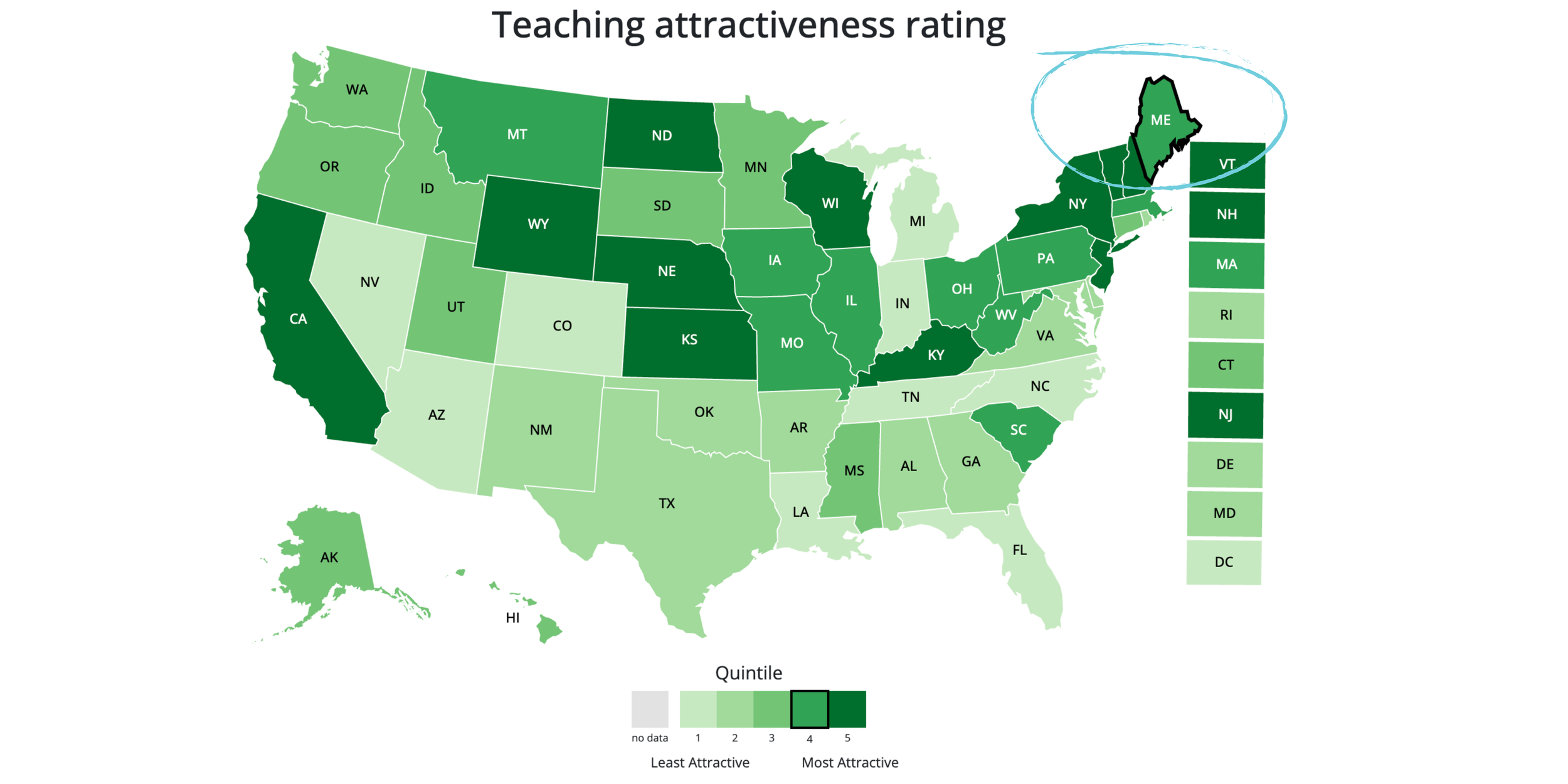
Source: Learning Policy Institute
Maine's Educator Workforce Snapshot
- Only 32% of Maine teachers say they are "very satisfied" with their jobs.
- Teachers who have considered leaving are twice as likely to name stronger administrator support as the most important improvement schools could make.
- Maine's Legislative Task Force on School Leadership warned of a "school leadership crisis" due to unfilled principal and district leader positions.
- In Maine, more than half of district administrators (56%) have five or fewer years in their current role, and one in four building leaders has less than two years of experience.
Turnover is costly, disruptive, and preventable when we pay attention to working conditions.
Educator Working Conditions are
Student Learning Conditions
For Maine students to thrive and compete, they need exceptional teachers.
However, the state faces critical challenges:
Educator burnout and turnover are significantly impacting students and schools.
Retention and recruitment are pressing issues, particularly in rural communities.
The growing educator shortages are driven by:
More educators considering leaving the profession early.
A shrinking pool of educators committed to long-term careers in teaching.
Vital Network’s Five-Year Plan to Transform Education in Maine
With legislative support, we can:
Launch a Maine-based retention initiative with Educate Maine focused on improving workplace conditions.
Invite teachers and school leaders to share their experience through brief, research-based surveys at key points during the school year (typical participation: 85%+).
Turn data into action by supporting district and school leaders in locally appropriate improvement work aligned with existing initiatives.
Surface regional and statewide patterns that can inform policy discussions and resource alignment.
Strengthen both teacher retention and principal retention by improving the conditions that make schools sustainable.

Check Out Our Work With North Dakota
Launched the Vital program with large, medium, and small districts in rural and urban communities.
Partnered with the state council on education leaders (NDCEL) and regional agencies to tailor the model for unique local contacts and deepen impact.
Contributed to the Governor’s Task Force on Teacher Retention.
Initiated school administrator retention efforts
Established a research partnership with DPI to identify actionable strategies to increase teacher retention.
Listen to Jeff McKenna, Chief Human Capital Officer, Fargo Public Schools talk about their experience working with Vital Network.